Home » Blog » Page 16

Category: Blog

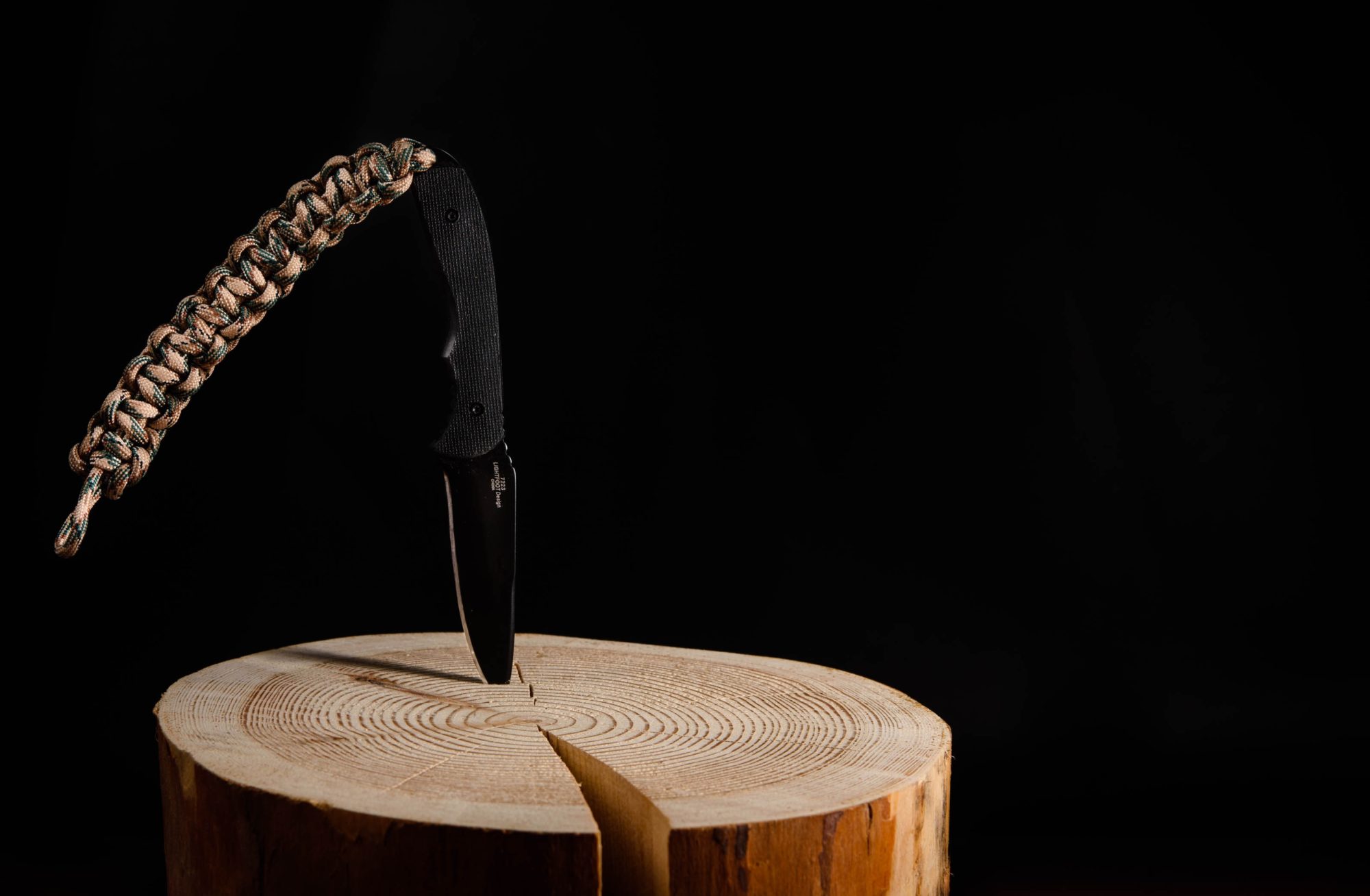
Confessions of a Knife Saleswoman

Have you ever found yourself trying to become perfect at the wrong thing? I want to tell you a story about one of the many times I fell into that trap. At twenty-one years old, I walked out into the bright sun in a black robe and received my college diploma. I dreamt of being a writer, or starting a school someday. First, I really wanted to travel. So I went home, lived with my Mom, and got the best job I could find that would help me make a lot of money, fast: I became a knife saleswoman.

The way the knife business worked was that we were supposed to ask our parents for a list of names of potential buyers. My mother said, “I’m not going to let you con my friends into buying something.” My father said, “You have to do it the hard way. Get on that phone; make forty calls a day.” But without a list of names, who was I supposed to call? My lucky break came when I went to get a haircut. The stylist was young, gay, and happened to know a lot of other gay men who were doctors and architects, ones who were constantly remodeling their kitchens. He said, “I’ll give you a few names, Sister; don’t you worry. You’ll be selling more knives than late-night TV.”

Within a month, I was winning sales trophies and forgot that I was only selling knives to go traveling. I was way too busy competing with Victor Wong to become the top knife salesperson in the country. I even imagined that maybe I could do this for the long haul: be a writer, sure, but on the side, while selling knives. Then one day, on my way to visit my grandmother in her retirement home, the thought occurred to me that I could probably make a couple of sales while I was there. I imagined that my family would be horrified by what I had become, but when I confessed to my Dad that I thought of selling knives to helpless old ladies, he said, “That’s my girl!” Pleasing my father fueled my confusion as to what my path was supposed to be. Should I pursue a career in business?

One sticky, hot August afternoon, I had one more sales call to go. I knocked on the heavy door of a three-storied, red-bricked home. I felt like I had stood there before, long ago, in a Halloween costume. A woman dressed in a tailored gray blazer and skirt let me in. She had brown curly hair and glasses and was quite short. She only came up to my shoulder, but she seemed to tower over me with her suspicious stare and firm handshake. I asked for a tomato and a loaf of bread. I diced and sliced and decoratively coiled a penny into a pig’s tail with scissors. Then I looked down at my notes for the final question, “So, Mrs. Bartlett, do you want the Classic Carving set with scissors or the Holiday Carving set with a tomato trimmer?” Then I stopped. I knew that name. I suddenly knew exactly where I was. This was Noah Bartlett’s kitchen and I was pitching his mom a carving set.

Years ago, Noah and I were in a group of six students who were chosen to work independently with our own teacher, accelerating through elementary school. We thought we were invincible: a “Mission Impossible” team of nerds. We did everything together in those days: science fair projects, essay and public speaking contests, poetry readings and mock-trials. But as I grew older and hit puberty, I became less brave. Being apart of the Mission Impossible nerd team meant that I was different than all of the other kids. What I wanted most of all was to fit in with everyone. So I distanced myself from the nerds until I lost touch with them completely. I also lost touch with a part of me that I loved.

Now, thirteen years later, Noah’s mom looks at me hard and does not mince words, “Noah is in China. He is writing his second book with his Princeton professor. And you…you are selling knives!” She paused and looked at me with a mix of pity and judgment, “Don’t you have any ambition?”

The words stung. But it was a fair question. I had forgotten about the little girl that was winning Science Fair competitions and who loved to write poems and read them aloud at school assemblies. What was I doing? Working long hours to become the top knife-selling person in the country? If I was as smart as those teachers thought, why had I driven over a hundred miles yesterday to sell a bagel spreader?  But Mrs. Ziegler’s assumption was wrong; I had plenty of ambition. I also had a supercharged work ethic. What I was missing was self-awareness and the bravery to go after the things that I truly loved. I didn’t answer her question. Instead, I rolled up my red-felt demo cloth, asked her to give Noah my best, and left.

The next day, I called my supervisor, a man who only seemed to wear beige, and quit. My father, the businessman, almost cried when I handed him my sales trophies and told him I was through. My mother asked if she could use my demo knives in her kitchen while I was gone. I hopped on a plane with my backpack. I wasn’t sure what I was going to do after my travels.

Was I still haunted by Mrs. Ziegler’s question? Yes. But looking back, I see that I beat myself up way too much for not accomplishing more, and I spent too much time comparing myself to Noah and everyone else. What Mrs. Ziegler had described was Noah’s path. Who knew where that would take him? As Emerson said, “The voyage of the best ship sails a zigzag of a hundred tacks.”

My path has not been straight, but it has worked out really well. I am living a brave, magnificent life full of adventure while serving others. I pay more attention to where I put my ambition, and I no longer fantasize about selling bagel spreaders to old women in senior homes, thank goodness. But when I go home to visit my parents, there are still a few people who call me “The Knife Lady” and stop me at backyard BBQs to ask me to coil a penny with a pair of scissors. I usually do it. Why not? One good party trick is a terrible thing to waste.

****

Terrorists or Neurosurgeons?

“You know what I think when I see a muslim man in the airport?” my husband Kurt asked me as we waited in the security line at the Phoenix airport. “What?” I looked around nervously, wondering where this might be going.

“Neurosurgeon,” Kurt said, and smiled.

Kurt and I have spent the last two weeks in airports and in doctors offices across the country. When I first received my diagnosis of a skull-base tumor, I called the only neurosurgeon I knew, Dr. Moustapha Abou-Samra, in California. He is an immigrant, the father of two of my former students, and a man I hadn’t spoken with in over 20 years. He was on vacation and yet he returned my call immediately. He took the time to walk us through the difficult journey ahead.

Three days ago we were in Boston because the leading world expert on skull-base tumors, Dr. Ossama Al-Mefty, an immigrant from Syria, had seen my MRI scans. He personally spent two hours with us during his dinner time, just to help us understand my diagnosis. Today we were in Phoenix, sitting for five hours in a packed waiting room at the Barrow Neurological Institute. The surgeon, Dr. Spetzler, an immigrant from Germany, had made an extra effort to see me; I would be one of 108 patients his team of surgeons would meet that day.

In the waiting room in Phoenix, there were large screen TVs on every wall, broadcasting the Republican National Convention and its theme, “Make America Safe Again.” The waiting room was quiet and tense. There was an older couple next to me. The man wore a US VET ball cap. He told me he was there for a check-up after a near-fatal aneurism. Dr. Spetzler had saved his life. It was hard to hear him when he spoke because the convention goers on the TVs were so ravenously enthusiastic about their candidate that the room seemed to erupt into Bieber-Fever shrieking every few minutes.

“We need a total and complete shutdown of muslims entering the United States,” Donald Trump has declared, and as I watched the convention, the speakers who seemed to get the loudest shrieks of approval were the ones who talked about the need to strengthen our borders. Our country’s problems are clearly the fault of those nasty, no-good immigrants.

Are these the same immigrants that are known for their expertise in solving complex neurosurgical problems? The ones who spend every waking minute dedicated to saving the lives of Americans?

We chose our surgeon, Dr. Ossama Al-Mefty, because of his unparalleled skill and experience, not to mention his complete devotion to caring for his patients, regardless of their background or religion. But hey, shut those borders down! We don’t need any more smart, dedicated people in this country.

*****

Brave Over Perfect

I come from a long line of strong women. My mother’s mother taught me how to hold a shovel, my father’s mother taught me how to hold a cigarette. People called me tough, independent, and smart. It was a great childhood, and for that I am truly grateful, but I was ultimately clueless when it came to making big decisions about relationships, love, work, and spirit. No one taught me how to be curious about my emotions (Why bother?) or how to take care of myself (Don’t be so selfish!). There were certain kinds of brave that I was good at: I could run up mountains and dive head first into giant waves. But there were other kinds of brave I needed to develop: how to stay true to myself in a crowd, how to face conflict, and how to keep trying when it doesn’t turn out perfectly.
The opposite of joy is not sadness, but perfectionism. When I am straining to do all parts of my life well with the hope that I will rise above confusion and criticism, that’s what I call perfectionism. The world doesn’t need us to be perfect, it just needs us to find the courage to contribute to the common good.
These strong women raised me to believe that I could be anything I wanted to be. But the way I internalized that message was that I must be great. And there were many times that I didn’t feel capable of being great and so I gave up. All I ever saw were the outer, perfect performances of women in my life: my mother, in a graduation gown, receiving her second advanced degree, and her friends’ immaculate homes and flawless appearances. I never heard about their inner conflict, so that when I encountered doubt or my own imperfections as the leader of a school, as the director of a company, and as a mother, I thought that the confusion I experienced was uniquely mine. I assumed everyone else knew exactly what she or he was doing.
You may feel that way sometimes, like you are not good enough, or brave enough, or that there is something wrong with you because you can’t keep up with the world’s expectations. There is nothing wrong with you. Just ask people of all ages for their stories. Then listen to the constellations of suffering and beauty that make up who we are.
In teaching adolescents for over twenty years, I have had the privilege of listening to their biggest questions and concerns. Here’s how one girl I shall call Annie sums up her experience moving through the maze of defining herself. “We are like glass lanterns. There is a bottom: we are lesser than—and there is this top: we better be perfect—and then there is this hollow middle with an elusive wick, waiting for us to strike the match.” Maybe you too were conditioned to be good at striving for the top, reaching for external goals and illusory perfection, but does it leave you feeling anxious and hollow?
As a teacher, I heard this question a lot: “Is this right?” “Is this answer on the test right?” “Am I doing this essay right?” I understood my students’ desire; I had spent plenty of late nights in school erasing what I had written and starting over in order to get it right. But now the challenge is: How do we cultivate enough courage to truly banish the idea that we have to get it right before we begin?
The urgency to take on this challenge hit me one day, far away from home. I was traveling with students in Nepal on a cultural exchange. At 12,000 feet above sea level, we made our way along a narrow path that wound through cultivated gardens and modest homes. We came around a corner and there was a young mother with three of her children walking towards us, carrying large bundles of firewood on their backs. When we met in the path, Jackie, the student in front of our small group, put her palms together and bowed low to the woman to greet her. “Is this right?” She called out to me, at the back of the line, while the young mother bowed back at her. Jackie never saw the woman’s wide, affirming smile, because she was looking back at me, seeking approval. She also never saw the children rushing to embrace her.
It’s not Jackie’s fault. She was used to a system that rewarded her for playing by the rules. It made sense that she was trying to make a good impression, but the moment made me wonder, “What are we missing in our effort to get it right all the time?” Real connection. Abundant joy. Balance. Creativity. Plus the chance to play more, to tinker and try things, to roll up our sleeves and be apart of the teams that are innovating to solve big problems with no single, right answer.
The world cannot wait while we sit alone at our desks, erasing and starting over, trying to get it perfect. The world needs us to iterate and to expand the limits of what is possible if we want to make change. The only thing getting in the way is that we get stuck trying to find the single, right way. We don’t know who we are and what we want sometimes, and how to move forward. The more clear and grounded we can get about ourselves, the more impact we can make. But we have to be willing to do the work of discovering who we are.
Here’s where I want to take your hand in mine and say, “Let’s go find a different way together.” Let’s practice being brave over perfect on a daily basis until we strike the match and follow the light, full of joy.
***

The Crossroads of Should and Must


Throughout our lives we arrive over and over again at what writer, designer and artist Elle Luna calls the “The Crossroads of Should and Must.” Do we do what other people expect of us? Or do we honor the still, small voice within us that says we have something special to give?

Thursday Thought

“In every difficult situation, there is glittering opportunity: stronger relationships, deeper understanding, new meaning. If accepted, these opportunities can bring us fulfillment and even joy.”  —Christine Carter